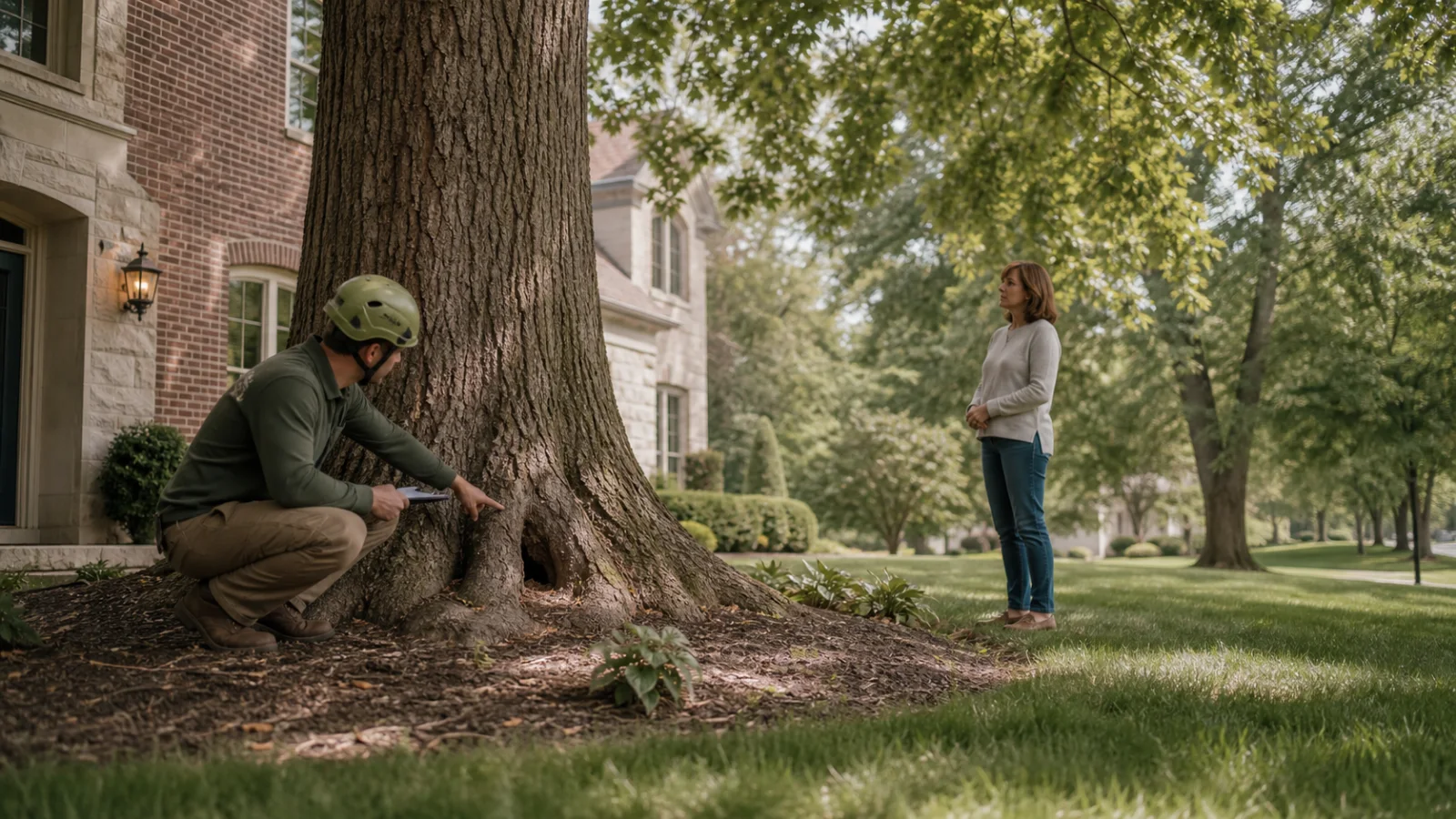
Start with change, not fear
Many mature trees have cavities, old wounds, or asymmetric crowns and remain serviceable. What raises concern is a new condition or a defect aligned with an occupied target such as a bedroom, driveway, sidewalk, or play area.
Walk around the tree from a safe distance. Compare the trunk to older photos if you have them. Note recent trenching, grade change, vehicle traffic over roots, lightning, or storms. That history helps an assessor interpret what is visible today.
Root and lower-trunk clues
A new lean paired with cracked or mounded soil can indicate root-plate movement. Excavation, driveway work, drainage changes, and soil compaction may affect roots even when the canopy still looks green.
At the trunk, look for widening cracks, open cavities, loose bark, fungal fruiting bodies, seams that have changed, or decay at a union. Do not probe cavities, climb, or strike the trunk to test it.
- Lifted soil on one side of the tree
- Roots cut by trenching or construction
- New crack at a major union
- Cavity with a changing opening
- Decay where trunk meets soil
Canopy clues
Dead branches, broken hangers, sparse leaf-out, and large limbs with cracks deserve attention—especially above frequently used areas. Purdue Extension notes that storm damage can be hidden and that leaning trees, pinned branches, and utility lines can create life-threatening situations.
Stay outside the drop zone during wind. Binoculars or a zoomed photograph can document a concern without placing you under it.
When to make the call
Keep people away and seek urgent help when a tree or limb is moving, resting on a structure, blocking essential access, or contacting a utility line. For non-immediate concerns, request an assessment before the next major storm or planned construction.
No visual checklist can calculate risk by itself. The point of the walk-around is to notice change, identify targets, and give the assessor a better history—not to label the tree safe.
Sources and further reading
Rules, recommendations, and conditions can change. Confirm current site-specific requirements before work.