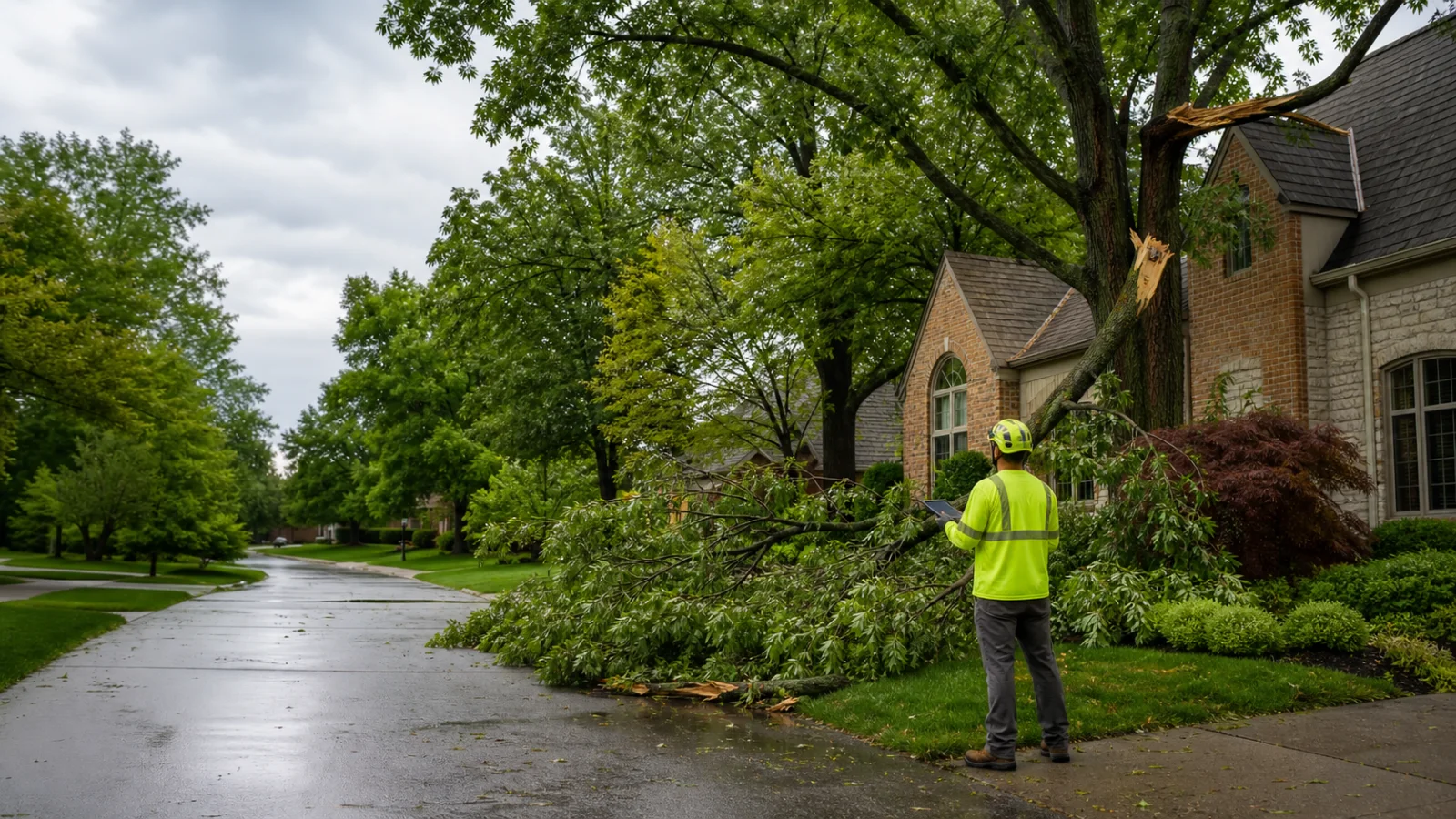
Protect people before property
Leave rooms beneath the impact and keep everyone away from cracked ceilings, shifting limbs, broken glass, and the tree’s root plate. If you smell gas, see fire, hear structural movement, or cannot exit safely, call 911.
A branch resting on a roof may be carrying stored energy. Cutting one end can roll the limb, release a split, or shift weight deeper into the structure. Do not climb onto the roof to inspect it.
Assume lines are live
Foliage can hide a service drop or downed conductor. Stay well away, keep others back, and contact the electric utility. Do not move branches touching a line, even with a wooden tool.
If a tree blocks a public street or involves public right-of-way infrastructure, report the location to the appropriate city service. Carmel directs right-of-way tree concerns to Carmel 311.
Document without entering the hazard zone
From a safe location, photograph the overall tree, impact point, visible interior damage, and affected belongings. Write down the time and weather conditions. Follow your insurer’s instructions before permanent repairs when circumstances allow.
Emergency work may be limited to stabilizing the tree and opening access. Roof repair, full removal, stump work, and landscape restoration can be separate scopes. Ask each party to define its boundary.
What the tree crew needs to know
Share the address, access restrictions, whether lines are involved, what the tree is resting on, and whether anyone is trapped or displaced. Photos from a safe angle can help with triage.
Expect the work zone to remain closed until loaded wood is controlled. Storm cleanup is slower than routine pruning because the tree may not behave predictably when a cut releases tension.
Sources and further reading
Rules, recommendations, and conditions can change. Confirm current site-specific requirements before work.