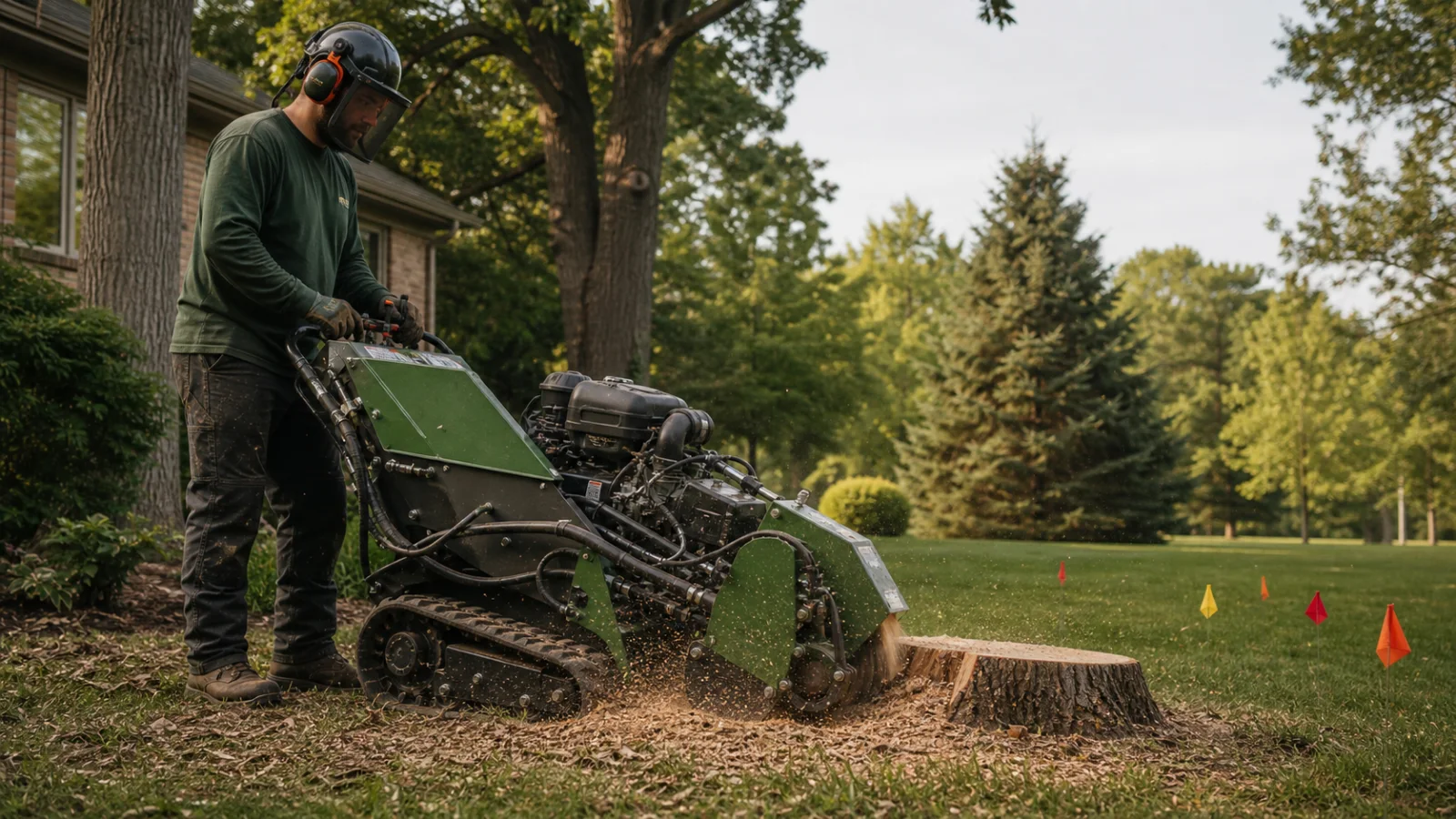
What grinding actually does
A grinder chips the stump and root flare to an agreed depth. The finished area is typically backfilled with a mix of soil and chips or with imported soil, depending on the restoration plan.
Grinding does not remove every root. As roots decay, small depressions can develop. Tell the contractor if the area will support turf, a bed, a new tree, a fence, or a structure.
When excavation may be considered
Root-ball removal is more disruptive and may require an excavator, hauling, and substantial backfill. It can be appropriate when a construction footprint cannot tolerate the remaining mass or when the entire root crown must be exposed.
Excavation near utilities, foundations, retaining walls, and preserved roots demands careful planning. The absence of a visible stump does not mean underground conflicts are absent.
Indiana 811 and private lines
Indiana 811 coordinates marking of member utilities before excavation. Property-owned lines—such as irrigation, landscape lighting, pool utilities, propane lines, or septic components—may require separate private locating.
Marking is part of the work sequence, not decoration. Do not remove flags before grinding is complete. Confirm the planned grinding area is inside the locate request.
How to define the finish
Specify grinding depth, visible surface-root treatment, chip removal, imported soil, rough grade, seed, and who handles settlement. “Grind stump” alone leaves several finish decisions open.
If a new tree is planned, choose a planting location based on future root and canopy space rather than forcing it into the exact old stump pocket.
Sources and further reading
Rules, recommendations, and conditions can change. Confirm current site-specific requirements before work.