The estimate is a work plan in numbers
A useful estimate should explain how the tree will come apart and how the material will leave the property. A sound tree in an open lawn can be a very different job from a decayed tree of the same height leaning across a roof.
Ask what assumptions the price includes: access width, ground protection, hauling, log handling, final cleanup, stump depth, and utility coordination. A low total with those decisions omitted is not yet comparable to a complete scope.
Seven variables that move the price
Tree size affects wood weight and debris volume, but condition changes what the crew can safely use for climbing or rigging. Nearby homes, fences, pools, service drops, roads, and retained landscaping shrink the margin for error.
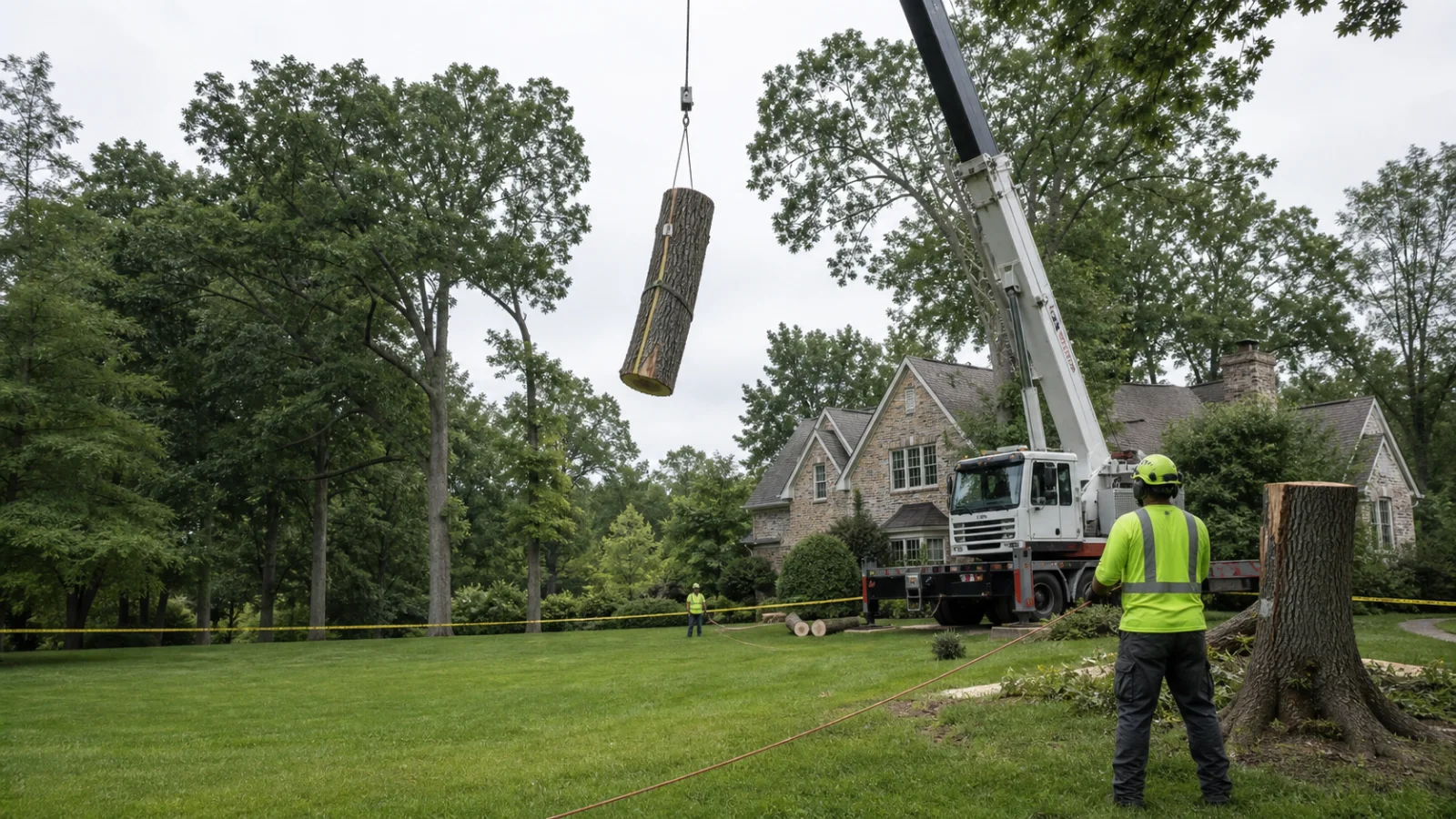
Access determines whether a loader, lift, stump grinder, or crane can reach the work. If material must be carried through a gate or lowered piece by piece, labor rises even when the tree is not unusually tall.
- Trunk diameter and canopy spread
- Decay, cracks, lean, and deadwood
- Distance to occupied targets
- Equipment and crane access
- Traffic or pedestrian control
- Debris, logs, and cleanup expectations
- Stump depth and site restoration
How to compare written estimates
Compare scope before total. One estimate may include hauling every log and grinding the stump; another may leave wood at the curb and price the stump separately. Confirm who handles utility locates and whether private lines such as landscape lighting or irrigation need separate marking.
Do not treat a website price range as a quote. Photos can help with initial screening, but the final method depends on distances, angles, targets, and tree condition that a site visit can reveal.
Questions worth asking
Ask who will perform the work, what insurance documentation is available, how the property will be protected, and what could change the price after work begins. If a crane is proposed, ask why it improves the plan. If it is not proposed for a tree over a home, ask how pieces will be controlled.
A clear estimate should leave you able to describe the plan in plain language. If you cannot tell what happens to the stump, logs, lawn, or final rake-up, get those decisions into writing.
Sources and further reading
Rules, recommendations, and conditions can change. Confirm current site-specific requirements before work.