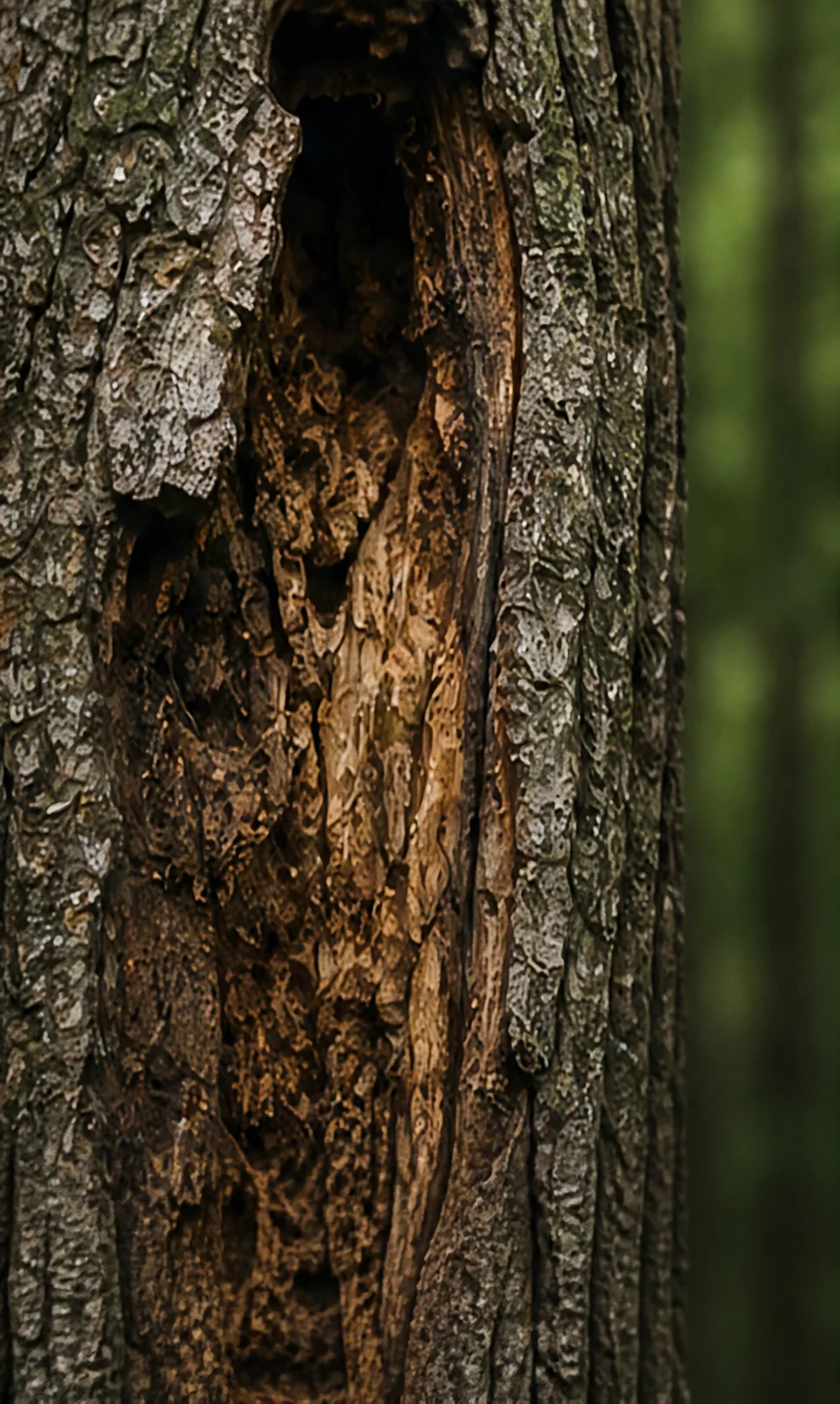
Indiana’s ash problem is statewide
Indiana DNR reports that emerald ash borer has been detected in all 92 counties. Larvae feed beneath the bark, disrupting the tissues that move water and nutrients and eventually killing branches and trees.
A declining ash may show thinning at the top, epicormic shoots along the trunk, bark splits, S-shaped galleries beneath loose bark, and woodpecker activity. Those signs overlap with other problems, so species and cause should be confirmed.
Why removal becomes harder with time
Dead ash wood can become brittle. That may reduce the extent to which a climber can rely on the trunk or limbs and can change the need for lifts, cranes, or adjacent-tree access.
Do not wait beneath the tree looking for diagnostic holes. Photograph from the ground and keep targets out of the likely fall area until the condition is understood.
Questions for the estimate
Ask how the proposed method accounts for brittle wood, what equipment access is required, where sections will be lowered, and whether logs and stump grinding are included.
If the tree is in a woodland, its targets and ecological role differ from a dead ash over a driveway. The response should match the site rather than defaulting every dead tree to the same plan.
Plan the space after removal
Decide whether the stump will remain, be ground for lawn restoration, or be handled for replanting. Grinding depth for turf may not be enough for a new tree in the same spot.
Indiana DNR encourages obtaining firewood locally and burning it completely. Follow current local and property-specific rules before moving or storing wood.
Sources and further reading
Rules, recommendations, and conditions can change. Confirm current site-specific requirements before work.